
A Different Lever: Why I’m Joining Crossover Meats
On scale, pragmatism, and what actually works

I’m joining Crossover Meats as co-founder and COO.
This is a big deal for me. Let me explain.
I’ve spent over a decade in food system work, looking for solutions that could actually scale. Most of what I’ve seen requires people to change who they are or what they love to eat. Crossover doesn’t. It’s real meat (chicken blended with small amounts of beef, pork, or lamb) delivering the flavor people want with more protein, a lower price, and roughly half the environmental footprint. The company is already in 1,800+ retail stores including Food Lion and Walmart, with foodservice distribution through Sysco and US Foods. This isn’t a concept; it’s a product on shelves.
Before I go further: I’m still running Plantega. We’re in nearly 70 locations across New York City now – more than ever before – even as the broader plant-based category faces headwinds. I’m proud to work alongside some of the biggest brands in the space, and I believe in the team we’ve built. But not every context allows for a fully plant-based solution, and not every consumer is ready to make that choice. Crossover represents a different lever, and I want to explain why I’m pulling it.
The Scalability Problem
There are many reasons to care about how we eat: health, animal welfare, food justice, cultural preservation. All of them matter. But for me, the environmental case has always been the entry point. It’s what led me to write Eat For The Planet, and it’s what drove nearly 200 conversations on the podcast, trying to understand what actually moves the needle.
I’ve been writing and talking about food and climate for over a decade, but Michael Grunwald’s book We Are Eating the Earth gave me a deeper appreciation for the scale of the problem. I talked with him earlier this year, and his arguments have stayed with me. Grunwald is one of the best environmental journalists working today, and the book is meticulously researched. What it does better than anything I’ve read is articulate the land challenge: we use a land mass larger than Europe and Asia combined for agriculture, and three out of every four of those acres grow grass or crops to feed animals. Beef alone provides just 3% of our calories while occupying 50% of our agricultural land.
But here’s what gives me hope: something has already worked, even if it happened by accident. Grunwald points out that Americans have cut per capita beef consumption by about a third over the last half century. Not by eating less meat, but by switching to chicken. That shift, he argues, inadvertently did more to reduce emissions than any dietary change before the rise of solar. Beef is roughly ten times worse for the climate and planet than chicken or pork.
That ratio is the whole ballgame. Yes, there are better ways to raise cattle, but they require more land, not less. There’s no version of feeding ten billion people where cattle occupy anything close to their current footprint. The math just doesn’t work. Chicken scales in ways beef never can. And once you see that, it’s hard to unsee.
Grunwald makes another point that stuck with me: if beef were only two times as bad as chicken rather than ten times, we’d eat way less of the Earth. That’s the Crossover thesis in a sentence.
Meeting Demand Differently
Americans love burgers. They love ground beef in tacos, meatballs, bolognese, and a hundred weeknight dinners. This isn’t a preference we’re going to educate away. That demand is real, it’s cultural, it’s woven into how people feed their families, and it’s not going anywhere.
So the question isn’t how to eliminate that demand. It’s whether we can meet it differently.
Michelle Adelman, Crossover’s founder and CEO, is someone I’ve known for years. First as a fellow traveler in the plant-based space, then as a friend. (We spoke at length on the podcast late last year.) She’s strategic, understands the food industry and the global scale of the problem, and has the kind of relentless, pragmatic optimism you need to build something new.
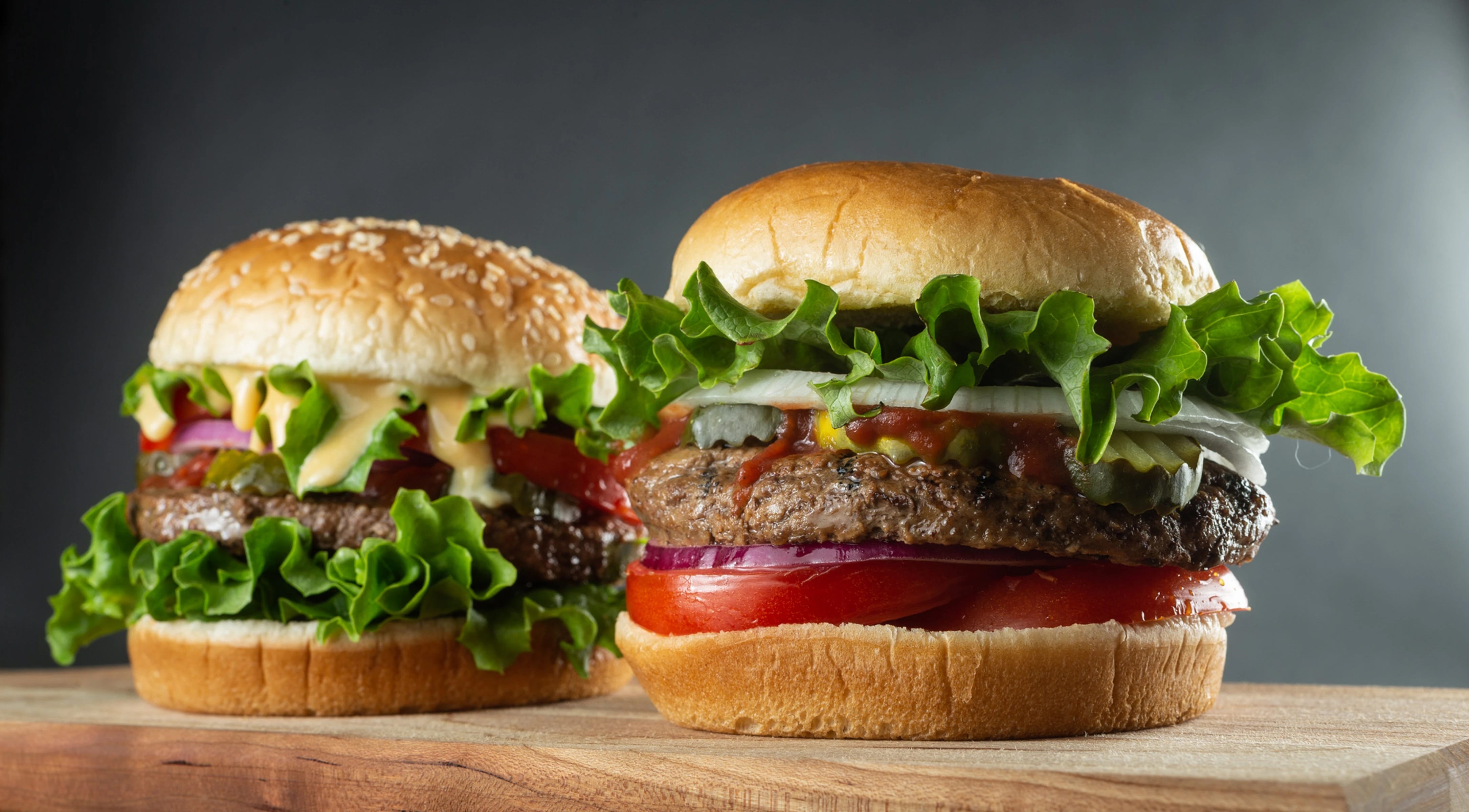
The product she’s built answers the question. The burger looks the same, cooks the same, satisfies the same craving. The consumer doesn’t have to change their behavior, adopt a new identity, or give up something they love. They just get a burger that happens to be smarter.
The scale of what’s possible here is worth pausing on. Americans consume over ten billion pounds of ground beef each year. Ground beef alone accounts for nearly 40% of all beef sales. Every pound of Crossover product carries roughly half the environmental footprint of conventional beef. At scale, that’s a meaningful reduction in the resources required to feed people what they already want to eat.
Context, Not Conversion
I’ve written before about the protein ladder, the idea that moving people down the emissions curve doesn’t require them to fundamentally change their values, beliefs, and diet, just shifting incrementally toward more efficient proteins. Crossover has that ladder built into the product itself. It meets people where they are, with what they already want, and delivers a better outcome without asking for sacrifice.
This connects to something I keep coming back to, the difference between changing minds and changing contexts. Plantega works because we embedded plant-based options inside bodegas that have been feeding New York neighborhoods for generations. When someone orders a chopped cheese at their corner store and it happens to be plant-based, they’re not making a statement, they’re just getting lunch. The context does the work.
This is the challenge alternative protein has always faced. It needs the right context to succeed: the right menu, the right placement, the right framing, the right consumer. Crossover doesn’t have that constraint. It works anywhere meat works, because it is meat.
Why Now
We need solutions that scale within the systems we have, not just the systems we wish existed. That’s why I’m joining Michelle and the team at Crossover Meats. Every acre matters, and every pound of protein that comes from a source other than cattle is land returned, emissions avoided.
In a world running short on time and land, better is better than worse. And better is worth fighting for.
I feel sadness arise in my heart reading your blog.
We know that replacing red meat with meat from chickens can help combat climate change, but at what moral cost? It’s a choice that greatly increases animal suffering. If the solution to one problem – global warming—only contributes to the worsening of another problem – the suffering of factory farmed animals – then it’s not a smart, creative, or admirable solution.