
I Rarely Eat at Vegan Restaurants Anymore. And That Might Be a Good Thing.
Beyond the Niche: When Plant-Based Food Becomes Just... Food

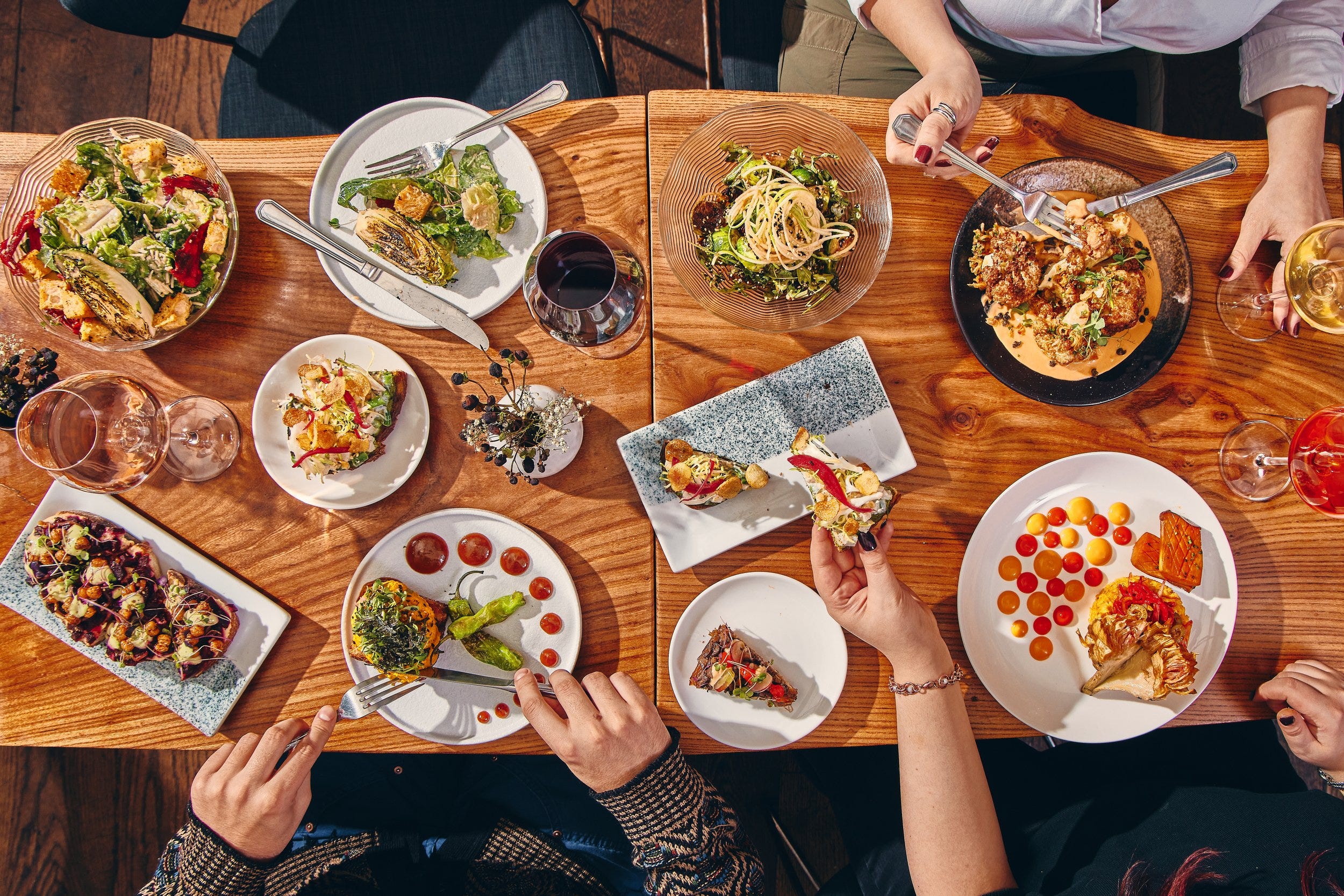
Living in New York City, I've noticed something unexpected about my dining habits recently.
These days, I can grab a tofu bánh mì at the Vietnamese spot around the corner, a meatless pasta that doesn't feel like an afterthought at a wine bar, or a solid breakfast sandwich from the bodega.
Plant-based food is everywhere now. And in some ways, that's the real win.
But it's also part of why all-vegan restaurants across the country are struggling.
The Latest Closures Signal a Challenging Landscape
Over the past year, we've seen a steady stream of closures: longtime New York spots like Blossom (which announced in August 2024 it would close after nearly 20 years), and even celebrity-backed ventures like Kevin Hart's Hart House (which shuttered all locations in 2024).
In Los Angeles, Flore Vegan in Silver Lake closed after 16 years in business in 2024, along with Nic’s On Beverly, and Matthew Kenney's VEG'D in Costa Mesa.
This trend isn't limited to the US either. The most notable international casualty has been NEAT Burger—the chain backed by Formula One champion Lewis Hamilton and Leonardo DiCaprio—has closed all its UK locations. This follows earlier closures of their locations in New York City and Dubai. The company had rapidly expanded internationally but faced mounting financial challenges, reporting significant losses of £7.85 million in 2022.
Of course, this isn't just a vegan restaurant problem. Restaurants are shuttering across categories due to rent hikes, labor shortages, inflation, and lingering supply chain issues.
But there's something else going on.
Being a "Vegan Restaurant" Just Isn't the Draw It Once Was
The consumer base has shifted. According to Gallup, the percentage of Americans who identify as vegetarian or vegan has barely budged in years—just 4% and 1% respectively as of 2023.
But the number of people choosing to eat more plant-based without the label has increased. A 2023 report from the Plant Based Foods Association found that 62% of U.S. households purchased plant-based products, and 81% of them came back for more.
Meanwhile, 61% of consumers now expect restaurants (regardless of category) to offer plant-based options. That stat is from Technomic's 2024 Global Restaurant Trends Forecast, and it's been trending up.
The Plant-Based Market: Mixed Signals
Despite the restaurant closures, the broader plant-based market still shows potential. According to Nielson IQ, while the sector is experiencing a slowdown after years of rapid growth, it still has a strong foundation. The most successful innovations are occurring in categories where plant-based items currently have low market share but high growth potential.
Looking at the bigger picture, according to Precedence Research's January 2025 report, the global plant-based food market was valued at $46.77 billion in 2024 and is projected to reach $103.75 billion by 2034, growing at a CAGR of 8.29% from 2025 to 2034. This suggests that while standalone vegan restaurants may be struggling, the overall demand for plant-based options continues to grow.
The Evolution of Plant-Based Dining
So fewer people are seeking out exclusively vegan spaces. They're expecting plant-based options to be available wherever they go, and they're expecting those options to be good.
And for the most part, they are. From fast casual to fine dining, food trucks to sports arenas, plant-based is showing up in more places than ever. It's not replacing everything, but it's no longer the outlier.
In that context, an all-vegan restaurant no longer holds the same novelty, or the same necessity.
What's particularly interesting is how some previously all-vegan restaurants are adapting to this reality. Several formerly vegan establishments like Moonburger, Hot Tongue Pizza and Burgerlords have added animal proteins to their previously meat-free menus. It's a sign that the strict vegan identity is becoming more fluid as restaurants adapt to changing consumer preferences.
To Survive Now, Vegan Restaurants Have to Be More Than Vegan
They have to be great restaurants.
The ones still thriving—like those under the award-winning Overthrow Hospitality group in New York City—aren't just selling identity. As I discussed in my podcast conversation with founder Ravi DeRossi, they've cracked the code on plant-based dining by focusing on exceptional culinary experiences first. Avant Garden, which opened in 2015 as DeRossi's blueprint for plant-based dining, Cadence, and Ladybird are all examples of successful vegan establishments that prioritize excellent food, atmosphere, and experience.
Cadence, for instance, continues to evolve under new Executive Chef Haley Duren, who brings her Southwestern influences to the restaurant's Southern soul food foundations, introducing bold dishes like Lobster Mushroom Boil and Nashville Hot Sandwich.
Similarly, Crossroads Kitchen (with locations in LA and Vegas) positions itself differently from typical vegan restaurants. As they put it, "Crossroads is not what people picture when they think of a vegan restaurant" with its upscale décor and refined environment. Their approach is defined "not by what's missing but by what it is."
This isn't a eulogy. I still root for vegan restaurants. Some will thrive, and some should. But maybe this isn't a decline, it's a diffusion. Maybe the real marker of progress is that I don't need a vegan restaurant to eat plant-based anymore.
The industry is responding to this shift. As Innova Market Insights noted in its 2024 trends report, plant-based food is evolving to better align with consumer expectations through "applied offerings" – adaptations of familiar dishes that make it easier for flexitarian consumers to integrate more plant-based foods without completely changing their eating habits.
Plant-based food isn't niche. It's part of the default. That might not feel revolutionary, but it is.
Bottom Line
The future of plant-based eating was never going to be defined by labels. It's about integration, not isolation. While dedicated vegan restaurants face headwinds, the concepts they pioneered are flourishing in unexpected places—from corner bodegas to fine dining establishments.
This isn't failure; it's evolution. Plant-based options are becoming normalized, accessible, and most importantly, delicious. The market isn't shrinking, it's expanding beyond specialty venues into the broader food ecosystem.
Maybe the real success of the plant-based movement isn't measured by how many vegan-only establishments survive, but by how seamlessly plant-forward options have been woven into our everyday food landscape.
These aren't mere substitutes…they're legitimate culinary choices that stand on their own merits, being absorbed not into counterculture, but into the culture itself.
Thank you, Nil. There's a lot of value in this. In addition to vegan restaurants needing to be great to survive, they need to make sure they are publicizing themselves. I live in Los Angeles, where we're more spoiled for choice than other regions, but there are vegan restaurants closing that I've never heard of. If the first thing I'm reading about you is that you're going out of business, you probably failed at marketing/publicity.
There's no use in being great, or even exceptional, if nobody knows you exist.