
An Unlikely Case Study in Normalizing Plant-Based Food

My first job in New York City was at DoubleClick, one of the pioneering ad tech companies, which Google acquired in 2008. From there I spent a few years in consulting before joining Right Media, the company that invented the online ad exchange and was later acquired by Yahoo. For the better part of a decade I was deep inside the machinery of how brands reach people at scale, how consumer behavior is tracked and targeted, how attention is measured and priced.
Then in 2013 I walked away from ad tech to work on food sustainability. For the next thirteen years I thought about how to change what people eat. I did not expect those two chapters to connect. Until recently, when I started to understand what Plantega has built across our network of locations in NYC.
First, some context
The plant-based food industry has had a rough few years. I have written about this and the data tells the story plainly. Plant-based meat and seafood dollar sales fell 10% in 2025, reaching $1 billion with unit sales down 11%. When measured against total US meat sales rather than packaged retail alone, plant-based meat accounts for less than 1% of what Americans actually eat. The $19 billion invested in alternative proteins since 2016 has not produced a meaningful shift in what most people eat most of the time.
Plantega has not been immune to any of this. I wrote honestly about what it took to keep going. What got us through was staying focused on what we do best. This year, as our in-store presence reached real scale across New York City, I started running the numbers on what we had actually built.
Measuring impact
Plantega started as a pilot in three bodegas with a simple question in mind: what happens when you put plant-based food in the places people least expect to find it. Five years later we are in 75 locations across all five boroughs.
Plantega generates two types of exposure at every location.
Inside the store, based on average daily foot traffic of 703 customers per bodega, across our network Plantega generates approximately 19 million in-store plant-based food encounters every year. Every customer who walks through the door sees the full Plantega menu at every location, every day. Not a digital ad they can scroll past, but a physical menu board in the store where they buy their breakfast, lunch or snack.


Outside the store the numbers are even larger. NYC neighborhood commercial corridors see between 222 and 277 pedestrians per sidewalk segment per hour according to MIT research published earlier this year, corroborated by NYC DOT pedestrian count data. At a conservative 250 passersby per hour over approximately 12 hours of daily foot traffic, each Plantega A-frame generates approximately 3,000 passerby impressions per day.


Across the full network that adds up to roughly 52,000 in-store plant-rich food encounters every day and 225,000 brand awareness impressions from exterior signage, totaling approximately 277,000 daily touchpoints, 8.3 million per month, and 100 million per year.
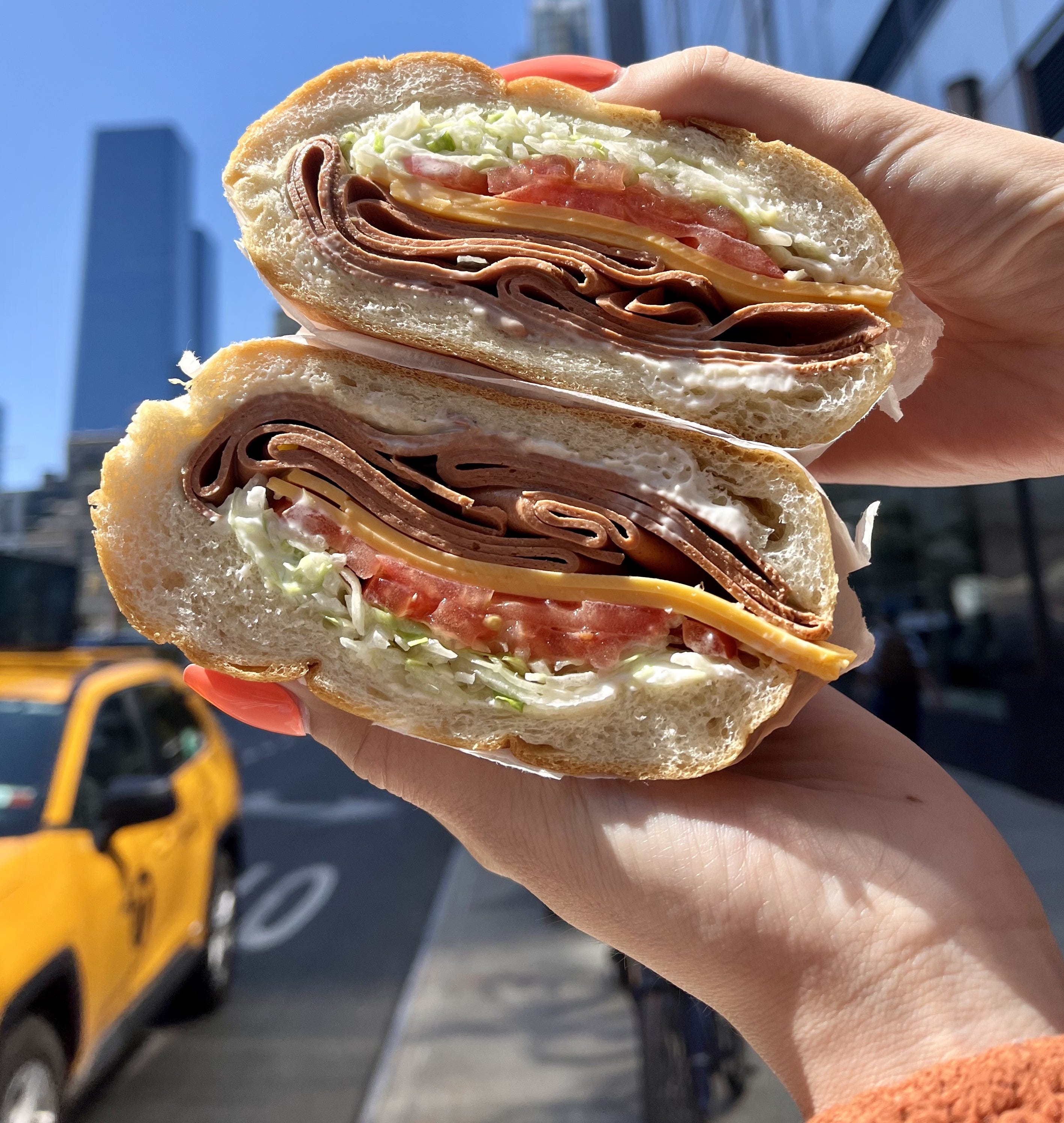
And underneath all of those encounters is something more tangible. Thousands of plant-based sandwiches sold every week across our ecosystem, generating real revenue for small business owners who make better margins on our menu than on most of what they sell. It is not happening through signage alone, but also because the food is good enough that people keep buying it, and because the bodega owner has a genuine economic incentive to keep it on the menu. That combination of commercial viability and cultural embedding is what makes this different from a campaign, which ends, while Plantega does not.
There is something else that comes with operating at this scale across this many distinct neighborhoods. Each location has its own demographic mix, its own community culture, its own relationship with the bodega owner, making it not just a distribution network but a testing ground. Brand partners who supply ingredients for our menu are embedded in that network too, with real visibility into how their products perform across different community contexts, not in a controlled study but in the places where people actually eat. We can try different menu approaches, different signage, different framing, and observe what actually changes behavior. That kind of real world data is almost impossible to find anywhere else in the food systems field. We have barely begun to use it, but it is there, accumulating.
What this is worth
According to the Out of Home Advertising Association of America, standard out of home advertising delivers a CPM (cost per thousand impressions) of $2 to $7. At a conservative $5 CPM the 100 million annual touchpoints Plantega generates represent approximately $500,000 in advertising value per brand partner annually. We have been delivering that at a fraction of the cost.
But the CPM comparison misses the point, and this is where my background in ad tech becomes relevant. A bus shelter reaches people walking past with no particular purpose. A Plantega A-frame does the same, but in neighborhoods where people shop for food every day. And once they walk through the door, our signage and menu reaches them at the highest intent moment in the consumer journey. Unlike a standard campaign that runs for four weeks and disappears, Plantega’s presence is permanent. Largely the same community members encounter it week after week, year after year, and that repetition is how plant-based food goes from unfamiliar to familiar. I wrote about the behavioral science behind this in The Five Conditions.
The normalization story is bigger than the advertising story
I did not build Plantega to create an advertising network, but to normalize plant-based food in New York City corner stores. Those two things are not as different as I thought.
Every brand impression is also a normalization moment. Every time someone walks past a Plantega A-frame or sees the menu or a Plantega poster while waiting for their sandwich, plant-based food shows up as a normal part of the neighborhood. A hundred million times a year, across 75 locations in New York City neighborhoods, that is what food culture change actually looks like.


We are on track to reach 100 locations by early 2027, at which point annual in-store encounters grow to approximately 26 million and total touchpoints reach approximately 135 million across New York City.
Bodegas with no connection to Plantega have started putting plant-based options on their own menus, not because anyone asked them to, but because plant-based food in corner stores has become normal enough that bodega owners now see it as something customers expect.
Maybe normalization is more about presence than persuasion, about showing up in the right place long enough that plant-based food just belongs there.