
Beef, Deforestation, and the Long Road to Change
On the Ongoing Journey to Understand What We Eat and Why It Matters

Fifteen years ago, I embarked on an unforgettable journey through South America. My adventure began in southern Brazil, where I witnessed the magnificent Iguazu Falls straddling the border between Argentina and Brazil and ate at a churrascaria in a nearby town. From there, I continued south through Argentina until reaching Patagonia for the first time. There, surrounded by some of the most beautiful natural scenery I've encountered in my life, I realized something strange: I was eating beef multiple times a day during this trip. Something I never did back home in New York City. The meat was delicious and unlike anything I'd had in the U.S. Honestly, I don't think I'd enjoyed beef this much before.
Curious, I asked a local tour guide what made their beef taste so different.
“It’s grass-fed, that’s why it tastes good,” he said. “But it’s causing deforestation in the Amazon and the Gran Chaco.”
He went on to explain how vast sections of rainforest were being cleared to graze cattle and grow soy to feed animals. Many of those crops would eventually be shipped north, fueling the industrial animal agriculture system in the U.S.
He wasn’t wrong. While the Amazon rightly draws global attention, the Gran Chaco, which is South America’s second-largest forest, is facing its own quiet crisis. In 2024 alone, Argentina lost nearly 150,000 hectares of forest in the region, driven largely by cattle ranching and soy production.
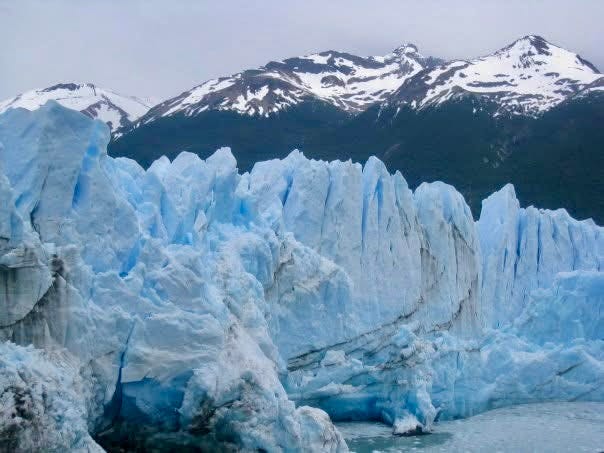
Maybe it was the breathtaking sight of glaciers, the fresh mountain air, or the quiet of nature, or just being far away from everything I knew, but that conversation cracked something open. I realized I didn't really understand how the food on my plate got there, or what it cost. To cut a long story short, that trip set me on the path I've been on ever since: learning, asking harder questions, and trying to make a difference with my work. That trip was also the last time I ate beef, and I haven’t looked back.
Broken Promises and Continued Deforestation
Fifteen years later, the issues I first encountered in South America have only grown more urgent. A recent investigation conducted by a team of journalists from the Guardian, Unearthed and Repórter Brasil revealed that JBS, the world's largest meat company, appears likely to break its Amazon rainforest protection promises once again. The company pledged to clean up its beef supply chain in the Amazon region by the end of 2025, but ranchers and industry insiders say this deadline is "impossible to meet."
Earlier this year, JBS's global chief sustainability officer made headlines by stating that the company's emissions goals were merely an "aspiration" and "never a promise that JBS was going to make this happen," despite previous commitments to end illegal Amazon deforestation by its cattle suppliers by 2025.
These challenges stem directly from the global appetite for beef. Despite pledges to eliminate deforestation from its supply chains, JBS has been repeatedly accused of sourcing beef from illegally deforested areas, with economic incentives often outweighing environmental concerns.
Even with U.S. tariffs on Brazilian beef now at 36.4%, demand remains so strong that Brazil filled its tariff-free quota in just two weeks. Cheap cattle and ample supply mean market forces continue to outweigh trade barriers, driving beef exports and, with them, deforestation.
The American Meat Challenge
Here in the U.S., the situation isn't better. Americans are on track to eat nearly 59 pounds of beef per person this year. Over 97% of that beef is produced through industrial feedlots. Plant-based meat, once viewed as a scalable alternative, has faced major headwinds, including a sustained misinformation campaign backed by the meat industry. Meanwhile, grass-fed and regenerative beef still make up only a sliver of the total supply. By most measures, they're growing more in public perception than they are on actual plates.
And yet the evidence is everywhere. We know industrial animal agriculture is one of the top contributors to deforestation, biodiversity loss, water pollution, antibiotic resistance, and greenhouse gas emissions. We know we can't meet global climate goals without changing how (and what) we eat.
But we're stuck in culture wars and industry-backed narratives that turn food into politics and stall meaningful change.
Signs of Progress
That doesn't mean we haven't made progress. Change takes time, and this is a long road. But it's worth noting how far we've come.
Fifteen years ago, conversations about meat, climate, and sustainability were still niche. Now, they're entering public policy, institutional procurement, and even national dietary guidelines. What was once dismissed as activist alarmism is showing up in corporate strategy decks and hospital menus. It's happening quietly, but it's happening.
A growing number of U.S. schools and hospitals are shifting to serve more plant-based meals. Just last month, Sodexo announced it would roll out climate-friendly menus across 400 hospitals through a partnership with Greener by Default.
In Montana, the Old Salt Co-op represents a hopeful counterpoint to industrial meat production. Founded by three ranching families, this collective is building a regenerative supply chain for the local food economy, with practices that restore degraded soils and treat animals with respect. At a time when cheap Brazilian beef continues to flood the U.S. market, Old Salt Co-op represents a different path—one that prioritizes ecological health, transparency, and local resilience over volume and price. While still small in scale, models like this show what's possible when producers center long-term stewardship over short-term efficiency.
These shifts may seem small in the grand scheme, but they point to something real: a growing recognition that food isn't just personal—it's systemic.
Bottom Line
The link between meat and planetary destruction isn't in question anymore. The question now is: what do we do with that knowledge?
The food system won't change overnight. But it is changing... in classrooms, cafeterias, policy rooms, on ranches, and yes, even on the side of a mountain in Patagonia, where a tour guide casually connected a plate of beef to the fate of the Amazon. Change can begin with something as simple as a conversation.
And maybe the hardest part of all this is knowing how urgent the crisis is... while watching change arrive in whispers instead of shouts.